There is a mountain that Oro Valley residents live with every single day, and most of them — if they are honest — have never really looked at it. Not the way it deserves to be looked at. Pusch Ridge does not politely ask for your attention. It simply rises above the Catalina foothills, rough-faced and ancient, and waits.
The ridge is named for George Pusch, a German-born rancher who ran cattle across these desert grasslands in the 1870s. His name stuck to the rock long after the cattle were gone. What remains is one of the most visually dramatic formations in all of southern Arizona — a jagged limestone escarpment that catches the sun differently at every hour and reads like an entirely different mountain depending on where you are standing and what the sky is doing behind it.
A Landmark That Transforms by the Hour
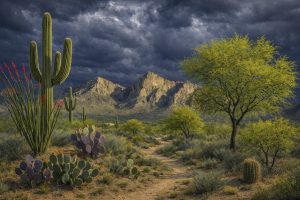
At sunrise, Pusch Ridge glows amber and rust, the low light pulling every crack and ledge into sharp relief. The saguaros on the south-facing slopes stand in silhouette against a sky that shifts from indigo to gold in minutes. Hikers on the Pusch Ridge Wilderness trails know this hour well — it is the reason they set alarms and lace up boots before the coffee is done.
By midday, the ridge bleaches out, the Arizona sun flattening its contours into pale limestone and shadow. Then, late afternoon arrives, and the mountain transforms again. The western light returns warmth to the rock, and on clear days, the ridge turns a deep terracotta that holds the color until the sun finally disappears behind the Tucson Mountains to the west.
Monsoon season changes everything. From July through September, towering storm cells build behind the Catalinas and sweep over the ridge with theatrical speed. Lightning strikes the high peaks. Curtains of rain sweep across the bajada. The air smells of creosote and wet granite. For anyone who has watched a monsoon storm approach Pusch Ridge from a patio in Oro Valley, the experience is not easily forgotten.
Why Artists Keep Coming Back to This Rock
Pusch Ridge has drawn photographers, painters, and printmakers for generations, and the reasons are not mysterious. The ridge offers what artists crave: strong contrast, complex texture, and a subject that never fully repeats itself. The play of light on limestone is different every morning. The seasonal wildflowers at the base of the ridge change the foreground palette from brown to yellow to purple depending on the year and the rains.
The ridge also sits at the edge of a community, which gives it a particular human weight. It is not wilderness that requires a two-day drive to reach. It is the mountain people see from their kitchen windows, office parking lots, and the back patios of homes in Rancho Vistoso and Stone Canyon. That intimacy — the landmark woven into the daily fabric of ordinary life — is what makes it worth rendering in art.
Pusch Ridge in the Sonoran Art Collection
At Sonoran Art, the Pusch Ridge pieces were among the first subjects we returned to again and again during the development of the collection. The challenge was doing justice to the ridge’s complexity without flattening it into a postcard. The Sonoran Desert is already photogenic enough that anyone with a decent camera can produce a serviceable image. What we were after was something that communicated the feeling of the ridge — the weight and the age and the particular silence that settles over the desert on a still winter morning when the Catalinas catch snow, and Pusch Ridge turns briefly, improbably white.
The prints in this series use an impasto-influenced painterly style that trades photographic literalism for emotional resonance. The texture of the ridge face is emphasized. The light is heightened. The colors lean into what the eye remembers rather than what the camera recorded. The result is wall art that residents of Oro Valley recognize immediately and visitors to the area want to take home.
Metal Prints: The Right Medium for Hard Rock
Pusch Ridge is made of rock. Hard, ancient, indifferent to weather and time. There is something fitting about rendering it on metal. The fine art metal prints in the Sonoran Art collection bring a luminosity to the ridge images that paper simply cannot match. The way the aluminum substrate catches ambient light — shifting slightly as you move across the room — mirrors the way the actual ridge shifts as the sun moves through the sky.
Printed by Centric Photo in Tucson, each piece is produced locally, which feels right for art rooted in a specific place. The ridge is here. The printer is here. The art belongs to this landscape.
Browse the Pusch Ridge collection at SonoranArt.co
Bring Pusch Ridge Home
If you live in Oro Valley, you already know the ridge. You have watched it in a thousand different lights, moods, and seasons. A Pusch Ridge fine art print is not decoration — it is a record of a place you have a relationship with. It is the mountain that has been in your peripheral vision for years, finally given the full attention it deserves.
If you are visiting from outside the region — or if you left Tucson years ago and still think about the desert in the small hours of the night — a print from this collection is the most direct way to carry that landscape with you.
Explore the full Sonoran Art collection at SonoranArt.co. Fine art prints of the Sonoran Desert, produced in Tucson, for walls that deserve more than a placeholder.